
Blocked Drain Clearing in Castle Cove
We clear blocked drains in Castle Cove and find the cause on camera before anyone quotes a repair. Postcode 2069, in the City of Willoughby, roughly 9.4 km north of the city. $0 call-out, a price agreed before we start, and someone on the phone any hour on (02) 8960 0868. Booking online works too, if you tell us what the drain is doing.
Castle Cove drainage at a glance
Australia Post delivery area.
Covered in full. Every suburb we cover near it is on the Willoughby and Chatswood page.
From the GPO, in a straight line.
Where Castle Cove sits, and the suburbs we cover around it
Castle Cove (2069) is in the City of Willoughby, about 9.4 km north of the Sydney CBD. We cover Middle Cove (1 km), Castlecrag (2.2 km) and Artarmon (3.4 km) as well, measured centre to centre.
Whether your own line needs clearing or repair is settled by a camera inspection, not by the postcode. The Willoughby and Chatswood page lists every suburb we cover around Castle Cove.
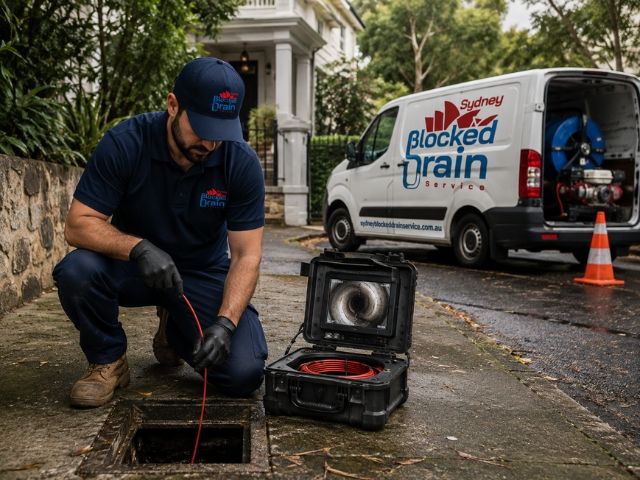
Drain work in Castle Cove
Start with Tree Root Removal from Drains, CCTV Drain Inspection or Pipe Relining. The full list for Castle Cove is below.
Every service we do in Castle Cove
If none of them is obviously right, ring and describe the problem.
Covered suburbs next to Castle Cove
Nearest first, Middle Cove at about 1 km. Marked ones sit under a different council.
Questions we get about Castle Cove
Do you service Castle Cove?
Yes. Castle Cove (2069) is covered, and the $0 call-out applies here as everywhere else. Middle Cove, about 1 km away, is covered too, and so is everything between the two.
Straddling two suburbs? Give us the street on the phone.
Which council area is Castle Cove in?
Castle Cove is in the City of Willoughby.
The council is not the dividing line. For wastewater, the private pipework runs to the point of connection with the Sydney Water system, which may be inside the property or beyond it. Stormwater responsibility is separate and depends on the asset owner.
What do you charge in Castle Cove?
Coming out and looking costs nothing, and clearing starts at $69. The figure for your job is settled before work starts. The blocked drains page sets out how that is worked out.
Is Castle Cove covered overnight and at weekends?
Yes. Nights, weekends and public holidays included. Waste water inside the property is an emergency blocked drain and wants a phone call, not a form.
Arrange a visit in Castle Cove
Tell us the street and what the drain is doing, and you will have a price before anything starts. If it is overflowing, ring instead, because that one should not wait for a form.
NSW Licence 306733C. Fully insured. $0 call-out fee. Blocked drains cleared from $69.