
A blocked drain is annoying. A damaged drain pipe is the reason the same “blocked drain” keeps coming back. In Sydney, it’s especially common for older pipework (think clay/earthenware lines), tree root intrusion, and subtle ground movement to turn a minor blockage into a repeat cycle—slow drains, gurgles, smells, then a full backup again a few weeks later—making pipe relining a smart long-term solution rather than another temporary fix.
This guide helps you spot the difference between a simple blockage and signs of pipe damage, so you can act early, reduce mess, and avoid making the problem worse.
Blockage vs damage: what’s the difference?
A “blockage” is something inside the pipe restricting flow (grease, wipes, debris, roots).
“Damage” is when the pipe itself has changed shape or integrity (cracks, displaced joints, a sagging section, corrosion, or collapse). Damage doesn’t just slow water down—it creates the perfect trap that keeps catching debris and roots, which is why the problem returns.
Quick reality check
• A one-off blockage can happen in any home
• Repeat blockages, whole-house symptoms, or yard signs usually point to an underlying defect
The clearest signs that your drain pipe is damaged
Below are the most common warning signs Sydney homeowners see when the pipe isn’t just “clogged”.
1) Multiple drains are slow at the same time
If the shower, toilet, and laundry all slow down together, it often suggests the main line is restricted. A local blockage usually affects one fixture (e.g., just the kitchen sink).
What to watch for:
• Slow drainage in multiple rooms
• The toilet level rises higher than usual before draining
• The problem worsens when more than one tap is running
2) Gurgling sounds from toilets or floor wastes
Gurgling is often air being forced through water traps because the pipe can’t vent or carry flow normally. It can happen with a blockage—but if it’s frequent or happens across fixtures, it can indicate a persistent restriction caused by roots, a displaced joint, or a sagging section.
3) Recurring blockages that return quickly after being cleared
If your drains get “cleared” and then block again soon after, the pipe may be:
• Cracked, letting soil/silt in
• Misaligned (offset joints), catching debris
• Root-invaded, with regrowth entering through gaps
• Deformed (a “belly” or sag), holding standing water and sludge
This is the classic pattern where a short-term clear doesn’t address the underlying defect.
Q&A: How do I know if it’s a simple blockage or pipe damage?
If only one fixture is affected and it improves for months after clearing, it may be a straightforward blockage. If multiple fixtures are affected, you hear gurgling, notice smells, or the blockage returns quickly, that’s when pipe damage becomes more likely.
4) Sewage smells that keep coming back
A persistent sewer smell can mean:
• Waste is sitting in a low spot (sag/belly)
• A cracked section is leaking odours into soil cavities
• A partially blocked line is causing turbulence and gas release
• A damaged venting pathway is linked to flow restriction
If smells appear after you run water, do laundry, or flush, pay attention—that timing can be a useful clue.
5) Overflowing gully, boundary trap, or external drain point
If you have a gully or external overflow point, overflow there can indicate the sewer line is restricted downstream. This can be urgent because continued use can force wastewater out at the lowest exit point.
Sydney homeowners often aren’t sure who to contact when wastewater or stormwater issues show up, especially when the problem seems “outside” near the street. For local advice on what to do when drainage issues become serious on a property, you can refer to the City of Sydney’s guidance on drainage problems.
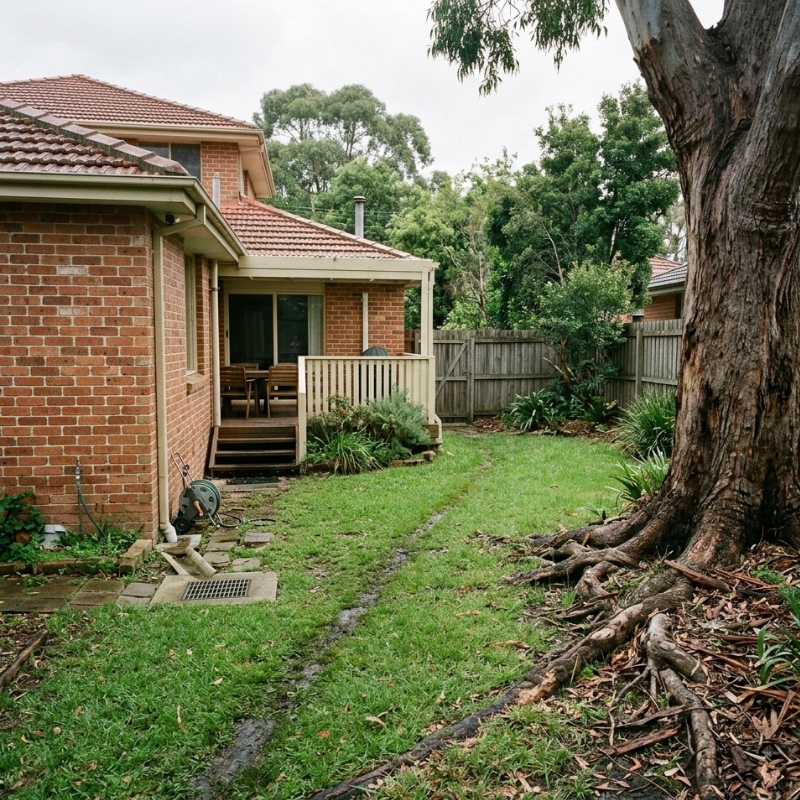
6) A soggy patch, sinkhole, or unusually green strip in the yard
Yard symptoms are a big red flag for damage. A leak can saturate soil and create:
• Spongy ground, even in dry weather
• A persistent wet patch
• A dip or sinkhole forming over the pipe path
• A suddenly “lush” strip of grass that doesn’t match the rest of the yard
Sydney’s mix of soil types and tree-heavy suburbs can make this more common than people expect, especially where older pipes run under gardens.
7) Blockages after heavy rain (especially if it’s repeatable)
If the problem shows up after storms, there may be:
• Stormwater infiltration into damaged lines
• Ground movement exposing joints
• Root intrusion worsening with moisture changes
• A partially collapsed section that can’t handle increased flow
Not every rain-linked issue means damage (stormwater systems have their own quirks), but repeat storm-triggered backups are worth investigating.
8) You notice fine grit, sand, or soil-like material in fixtures
If you’re seeing gritty material in traps or after clearing, it can be a clue that soil is entering through a crack or failed joint. That’s not typical for a simple kitchen grease blockage.
A Sydney-specific reality: why older pipes fail differently here
Many Sydney suburbs have a higher proportion of older homes with older materials and joint styles. Over time, small gaps can form at joints and cracks, allowing tree roots and fine material to enter, which then build into recurring restrictions.
That’s why “it cleared last time” doesn’t always mean “it’s fixed”.
What you can do right now (safe checks that help diagnosis)
You don’t need to be a plumber to gather useful clues—but you do need to stay safe and avoid actions that increase damage.
Step 1: Work out the scope
Ask:
• Is it one fixture or several?
• Does it worsen when more water runs (laundry, shower, dishwasher)?
• Is there an outside overflow point showing water or sewage?
Step 2: Stop doing the things that escalate backups
Avoid:
• Repeated chemical drain cleaners (they often don’t solve structural issues and can be harsh on ageing pipes)
• Flushing again and again during a slow-to-drain toilet
• Running multiple fixtures to “push it through”
• Using a cheap hand snake aggressively (it can snag, worsen a crack, or get stuck in collapsed sections)
Step 3: Document the symptoms
This sounds basic, but it speeds up diagnosis:
• Which fixtures are affected
• When it happens (after rain, after laundry, evenings only, etc.)
• Whether you heard gurgling or saw bubbles
• Any yard changes (wet patches, smells, dips)
When a CCTV drain inspection is worth it
If you’re seeing multiple warning signs—especially recurring blockages—CCTV inspection is often the turning point because it shows why the line keeps failing.
A typical inspection can reveal:
• Tree root intrusion points
• Cracks and fractures
• Offset joints (misalignment)
• A “belly” (sag holding water)
• Partial collapse or deformation
• Foreign objects lodged in the line
Q&A: What do CCTV terms like “offset”, “belly”, or “collapse” usually mean?
• “Offset joint” often means the pipe sections have shifted, creating a lip that catches debris
• “Belly” means a sagging section that holds standing water and sludge
• “Collapse” means the pipe has lost its shape and may be nearing failure (often urgent)
The “repair vs clear” decision: a practical symptom checker
Use this as a homeowner-friendly guide.
More likely a routine blockage
• Only one fixture affected (e.g., kitchen sink only)
• No gurgling anywhere else
• No yard signs
• Clears and stays clear for months
More likely underlying pipe damage
• Multiple fixtures slow/gurgle together
• Blockage returns soon after clearing
• Smells persist or recur frequently
• Yard wet patches, dips, or sewage odour outdoors
• Issues triggered by rain or increased flow
If you’re sitting in the “damage” column, that’s where longer-term fixes come into the conversation—especially if you want to stop the cycle rather than keep clearing the same line.
If you want to understand one common longer-term pathway, you can learn more about pipe relining without digging up the whole line.
When it’s urgent: stop using water and get help
Some symptoms mean you should reduce water use immediately because continuing can cause an overflow inside the home or yard.
Urgent red flags:
• Toilet overflow or sewage backing up in the shower/floor waste
• Gully overflow (especially with foul water)
• Strong sewage smell indoors plus slow drainage everywhere
• Water rising in the toilet when other fixtures run
Q&A: What should I do if sewage is backing up?
• Stop using water (don’t flush, don’t run taps)
• Keep kids and pets away from affected areas
• Ventilate if it’s indoors
• If there’s contamination, clean using appropriate precautions (gloves, disinfectant) and avoid aerosolising waste
Why recurring root problems often point to an entry point
Tree roots don’t usually “break into” a healthy sealed pipe. They exploit tiny gaps:
• Hairline cracks
• Failed joints
• Slight misalignments
• Old inspection openings
So if you keep clearing roots, but they keep returning, it often means there’s an access point that remains open. That’s where understanding when pipe relining is suitable becomes useful—because suitability depends on what the camera shows (and what the pipe’s shape looks like).
Common Sydney scenarios that suggest structural defects
Older clay lines in leafier suburbs
You might notice:
• Slower drainage during dry spells (roots seek moisture)
• Faster recurrence after jetting
• Yard smells near large trees
Renovations and increased water use
More bathrooms, bigger appliances, or high-use households can expose a defect faster, because the damaged section can’t cope with the load.
Driveways and heavy loads over pipe runs
Compression and movement over time can contribute to cracked sections or misalignment, especially if the line is shallow.
What a “long-term fix” usually aims to do
A long-term approach isn’t just about clearing what’s inside the pipe today. It’s about removing the reason debris/roots keep getting caught tomorrow.
Depending on what’s found, outcomes usually aim to:
• Restore a smooth internal path (so waste can pass without snagging)
• Seal gaps where roots and soil enter
• Reinforce damaged sections so they don’t worsen
• Reduce the need for repeat clearing
If your CCTV findings point that way, it can help to explore pipe relining solutions in Sydney.
FAQ
What are the most common signs of a damaged drain pipe?
Multiple slow drains, gurgling toilets, recurring blockages, persistent sewer smells, and yard wet patches or sinkholes are among the most common signs.
Can a blocked drain cause gurgling?
Yes—but frequent gurgling across multiple fixtures often suggests a persistent restriction that may be linked to roots, misalignment, or a sagging section rather than a one-off clog.
Why do my drains keep blocking even after they’re cleared?
Recurring blockages often happen when there’s a structural issue (cracks, offset joints, root entry points, bellies) that keeps catching debris or allowing roots to regrow.
Is a soggy patch in the yard always a broken pipe?
Not always, but it’s a strong warning sign—especially if it appears without rain, smells unpleasant, or sits directly over the likely pipe route.
Who is responsible for sewer repairs in Sydney?
It depends on where the blockage or damage is located relative to the connection point between private property pipes and Sydney Water’s network. Sydney Water explains its responsibility based on where its pipes connect to the property.
When should I stop using water and call a plumber?
If sewage is backing up, multiple fixtures are affected at once, there’s a gully overflow, or strong sewer smells coincide with slow drainage everywhere, reduce water use and get the line assessed promptly.