
A blocked drain can go from “annoying” to “unsafe” fast. One minute it’s a slow sink; the next, you’re dealing with overflow, nasty smells, and the temptation to pour in harsh chemicals that can damage pipes (or worse, create fumes and burns).
This guide is written for Sydney homeowners, renters, and strata residents who want to fix minor blockages safely, protect their plumbing, and know the exact moment to stop DIY and bring in a licensed professional. If you’re already in that “this is bigger than me” zone, jump straight to the call-a-pro signs below.
First, a quick safety reality check
Before you touch anything, decide which category you’re in. This alone prevents most DIY disasters.
If ANY of these are happening, stop DIY and call a plumber
- Sewage smell + water backing up in a shower, toilet, or floor waste
• Multiple fixtures affected (e.g., toilet gurgles when sink drains)
• Water rising in the toilet when you run a tap
• Overflow outside near a gully trap/stormwater point
• You’ve already used chemical drain cleaner and it’s still blocked
• The blockage keeps returning every few days/weeks
These are strong signs the blockage isn’t just “hair in the shower” — it may be a main line issue, a venting problem, or a more serious obstruction like roots or a damaged pipe section.
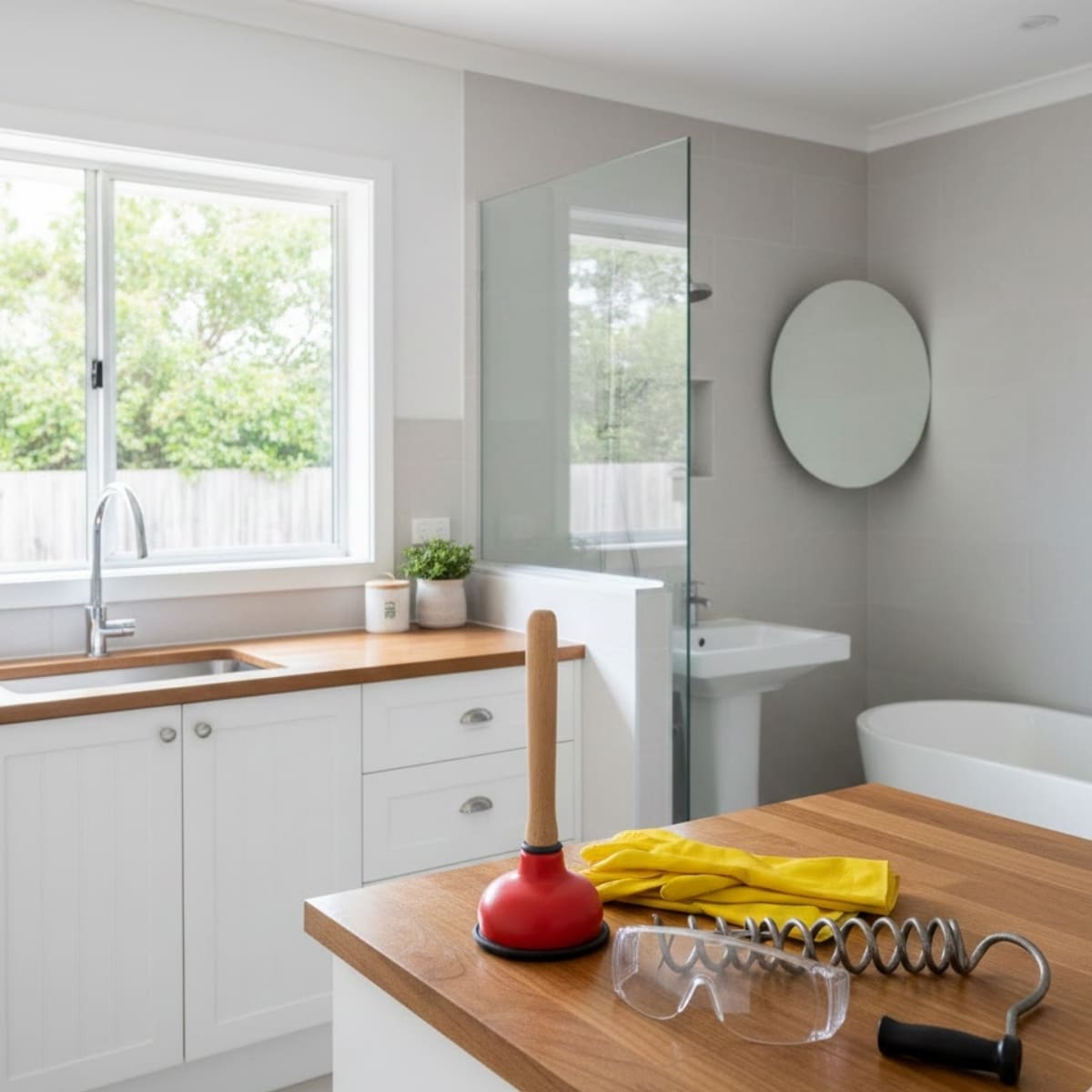
Basic PPE you should use for any drain work
- Rubber gloves (dishwashing gloves are fine for light work)
• Eye protection (especially if plunging or removing a trap)
• Closed shoes
• A mask if there are odours or you suspect sewage
• Good ventilation (open windows, use an exhaust fan)
If you’re in an apartment, remember: a shared stack can mean your “DIY experiment” affects neighbours below. When in doubt, escalate early.
What causes blocked drains in Sydney homes?
Sydney has a mix of older and newer housing stock, and the cause often depends on the area and the property style.
Common causes indoors
- Hair and soap scum (bathroom basins and showers)
• Grease and food scraps (kitchen sinks)
• “Flushable” wipes, sanitary items, too much paper (toilets)
• Mineral build-up over time (especially in older pipework)
Common causes outdoors
- Tree root intrusion (very common in established suburbs with mature trees)
• Leaf litter and silt in stormwater lines
• Broken, offset, or collapsed pipes (more likely in older clay lines)
• Poor falls or sagging sections that trap debris
If you suspect roots, don’t just keep forcing tools down the line — it can worsen damage or mask a bigger issue.
The safest DIY order of operations (do this in sequence)
The biggest DIY mistake is jumping straight to “the harshest option”. Safe drain clearing works best when you start gently and increase only as needed.
Step 1 — Identify the type of blockage (30 seconds)
Ask yourself:
• Is it one fixture (only the bathroom sink)? Or many (sink + shower + toilet)?
• Is it slow draining or fully blocked?
• Any gurgling sounds?
• Any sewage smell?
• Did it start after rain (stormwater) or after cooking (kitchen grease)?
If it’s one fixture and no sewage signs, DIY is usually reasonable.
Step 2 — Remove obvious debris (the “gross but effective” step)
For showers and bathroom basins:
• Pull the drain cover off (if accessible)
• Remove hair and sludge with a gloved hand or a plastic drain hook
• Bin it (don’t rinse it deeper into the pipe)
For kitchen sinks:
• Scoop out standing water if needed
• Check the strainer and remove trapped scraps
This step alone solves a surprising number of “blocked drain” situations.
Step 3 — Try hot tap water + dishwashing liquid (safe for many kitchen clogs)
This is a gentle method for grease build-up.
- Use hot tap water (or kettle water that’s cooled slightly)
• Add a small squeeze of dishwashing liquid into the drain
• Pour the hot water slowly to help soften and move grease
If your plumbing is older or you’re unsure of pipe condition, err on the side of hot tap water rather than near-boiling water.
Step 4 — Use a plunger correctly (most people don’t)
Plunging is safe and effective when done properly.
For sinks and basins:
• Add enough water to cover the plunger cup
• Block the overflow hole with a wet cloth (this is key)
• Plunge with strong, controlled pushes for 20–30 seconds
• Check drainage, repeat up to 3 rounds
For toilets (use a toilet plunger):
• Ensure the plunger seals around the hole
• Plunge steadily (avoid wild splashing)
• Stop immediately if the bowl is close to overflowing
If the toilet threatens to overflow, turn off the water at the isolation valve behind the toilet and call a professional.
Step 5 — Use a simple drain snake (hand auger) for hair clogs
A plastic drain snake or small hand auger is a good next step for bathroom drains.
- Feed the snake slowly
• Rotate gently to catch hair
• Pull it out carefully and dispose of debris
• Flush with warm water
Avoid forcing the tool hard. If you hit resistance that doesn’t feel like a soft clog, stop — it may be a bend, junction, or something more serious.
Step 6 — Clean the U-bend (P-trap) under a sink
If a bathroom or kitchen sink is blocked and you’re comfortable doing basic DIY:
- Put a bucket and towel under the trap
• Unscrew the fittings carefully
• Remove the trap and clean out debris
• Refit snugly (don’t overtighten)
• Run water and check for leaks
If you live in a rental, or if fittings look old and fragile, this is often a good “stop point” to avoid accidental damage.
What NOT to do (this is where people get hurt)
If you do only one thing from this blog, make it this section. Most drain DIY injuries come from chemicals, heat, and mixing methods.
Don’t mix chemicals — ever
If you’ve used a chemical drain cleaner, do not follow it with another product, vinegar, or anything else “because TikTok said so”. Mixing products can produce harmful fumes and cause burns.
Don’t pour aggressive boiling water into unknown pipework
Near-boiling water can soften or damage some plastics and old fittings, and it can also splash back when a drain is blocked.
Don’t keep “attacking” a recurring blockage
If it clears and then blocks again quickly, the cause is usually deeper:
• Grease build-up in the line
• A partial obstruction catching debris
• Roots, offset joints, or a damaged pipe
This is where professional equipment (like CCTV inspection and jetting) saves money long term.
Don’t ignore licence checks when hiring help
If you’re bringing someone in for plumbing or drainage work, it’s worth taking 60 seconds to verify credentials via the NSW Government. Use the official page to check a builder or tradesperson licence so you know who you’re letting onto your property.
When to call a plumber (Sydney-specific “stop points”)
Here’s the plain-English rule:
If the problem involves sewage, multiple drains, outdoor overflow, or keeps coming back, it’s time to call in a licensed blocked drain specialist.
Signs it’s beyond DIY
- Water backs up in a shower when you flush the toilet
• Gurgling sounds from multiple drains
• Bad odours coming from floor wastes
• Overflow at an outdoor drain point
• You cleared it, but it returned within days
• You suspect roots (common in Sydney’s leafy suburbs)
At that stage, the safest move is to book a pro and avoid damaging pipes. If you want a straightforward next step, learn how to clear a blocked drain safely with a pro-first approach (diagnosis, safe clearing methods, and a plan to stop repeat blockages).
What a professional does that DIY can’t
DIY tools work for local clogs. Professionals solve the “why” behind recurring blocks.
CCTV drain camera inspection (find the real cause)
A drain camera can confirm:
• Roots, cracks, offsets, or collapse
• Grease build-up and pipe condition
• Where the blockage is (and how far)
This prevents guesswork and avoids repeated DIY attempts.
High-pressure water jetting (clears without harsh chemicals)
Jetting safely scours the pipe interior and clears stubborn grease and sludge more thoroughly than plunging.
Root cutting and longer-term solutions
If roots are the culprit, clearing them is only part of the job. The long-term fix may involve:
• Root cutting + ongoing maintenance
• Pipe relining (repairing from inside)
• Replacing damaged sections
If you’ve seen repeat blockages, slow drains after rain, or you live near mature trees, it’s worth understanding tree root damage in drains and how to prevent the cycle.
Safe prevention tips that actually work in Sydney households
Prevention is cheaper than emergency call-outs — and it’s mostly about what you don’t put down drains.
Kitchen prevention (grease is the enemy)
- Wipe oily pans with paper towel before washing
• Collect cooking oils in a container and bin it (don’t pour it down the sink)
• Use sink strainers to catch food scraps
• Run cold water briefly after using the disposal (if you have one), then finish with warm water
Bathroom prevention (hair management)
- Use a hair catcher in showers
• Clean the drain cover weekly
• Don’t rinse heavy creams and thick products down slow drains repeatedly
Toilet prevention (the 3P rule)
Only flush:
• Pee
• Poo
• Paper
Everything else belongs in the bin — wipes included.
Stormwater prevention (especially before heavy rain)
- Clear leaves from grates and gutters
• Check downpipes aren’t dumping debris into stormwater lines
• If pooling forms in the same spot every time it rains, don’t ignore it
FAQs
What is the safest DIY method to unblock a drain?
Start with removing visible debris, then hot tap water + dishwashing liquid (kitchen), then a properly used plunger, then a simple hand snake for hair clogs. Escalate only if it’s a single fixture and there are no sewage signs.
Is baking soda and vinegar safe for blocked drains?
In small amounts it’s usually low-risk, but it’s also often overrated for serious clogs. Never use it if you’ve already poured a chemical cleaner down the drain. If you’re unsure what’s been used previously (common in rentals), skip it.
Can I use chemical drain cleaner safely?
It’s not the first-choice “safe” option. Chemical cleaners can cause burns, produce fumes, and may not fix the underlying cause (especially grease or roots). If chemicals have already been used and the drain is still blocked, stop DIY and call a professional.
How do I know if the blockage is in the main sewer line?
Common signs include:
• Multiple drains backing up
• Toilet gurgling when you run a tap
• Water rising in the toilet bowl
• Sewage smell or overflow at an outdoor drain point
Should I call a plumber for a slow drain?
If it’s one fixture and it’s occasional, try the safe DIY sequence first. If it’s recurring, getting worse, or multiple fixtures are affected, call a plumber early — it’s usually cheaper than waiting for an overflow.
Do tree roots really cause blocked drains in Sydney?
Yes, especially in suburbs with mature trees and older pipework. Roots seek moisture and can enter through tiny cracks or joints, then trap debris until a full blockage forms. If your blockage keeps returning, roots are a strong possibility.
A simple Sydney “blocked drain safely” checklist
Use this as your go-to when it happens again.
Safe DIY checklist
- Confirm it’s one fixture only
• Put on gloves + eye protection
• Remove visible debris
• Try hot tap water + dishwashing liquid (kitchen)
• Plunge correctly (seal overflow holes)
• Use a hand snake for hair clogs
• Clean the P-trap if you’re confident
• Stop if there’s sewage smell, multiple fixtures, or repeat blockage
When to stop and call a pro
- Sewage, overflow, or strong odours
• Multiple drains affected
• Recurring blockage
• Suspected roots or outdoor drainage issues
• Chemical cleaner already used with no success
If you’re at that point, the safest path is a licensed specialist who can diagnose the cause and fix it properly.
Next steps if you want it fixed properly (without guesswork)
If you’ve tried the safe basics and the problem is still there (or keeps returning), don’t keep escalating DIY — that’s when damage and mess tend to happen. Book a licensed specialist early so the cause is identified and properly cleared.
If you need help now, start with blocked drain services in Sydney for professional diagnosis and clearing.