
Blocked-Drain Myths Still Tripping Up Sydney Homeowners in 2026
Old beliefs that keep coming back
Sydney’s housing stock is a mix of heritage terraces, mid-century brick veneers and brand-new apartments. Each era left its own plumbing quirks, yet one thing unites every postcode: clogged pipes are still the most common plumbing emergency call-out. Despite endless online advice, a handful of stubborn myths continue to steer homeowners toward costly mistakes. We’ll unpack the worst offenders, show why they refuse to die and point you toward fixes that work.
Early on, remember there’s a reason professional blocked drain specialists carry inspection cameras, jet blasters and pipe-relining gear. Kitchen hacks can buy a day or two but rarely solve the underlying obstruction.
Myth 1 – “Boiling water melts away any grease”
Tip videos love to show a kettle curing sluggish sinks. Straight boiling water can help break down fresh cooking fats, but once grease has cooled and hardened inside a cast-iron or PVC line the temperature at the blockage drops rapidly. Worse, repeated blasts can soften certain plastic joints, especially in older 1980s installations that pre-date today’s heat-rated fittings. Boiling water is fine as a preventive rinse right after washing up, yet it is no substitute for mechanical cleaning once a drain is truly choked.
Myth 2 – “Store-bought caustic crystals are as good as professional chemicals”
Hardware aisles still sell sodium hydroxide pellets with 1990s-style packaging that promises miracles. What the front label doesn’t reveal:
- Caustic soda only works on organic sludge. Tree roots, mortar dags and lost kids’ toys laugh at it.
- Incorrect dilution can etch galvanised traps or pit chrome waste arms.
- NSW Fair Trading receives dozens of minor burn reports every winter from splash-back incidents.
Licensed plumbers do use alkaline or acid cleaners, but they pair them with pH testing, protective gear and immediate freshwater flushing. If you decide to tackle a slow basin yourself, follow the mix ratios to the letter and ventilate the room. Stop the moment water sits unmoved after one treatment—persisting can bake the obstruction into a rock-hard plug.
Myth 3 – “A plunger works the same on every fixture”
Toilets respond well to a plunger because the trap is full of water, allowing hydraulic pressure to build. Laundry tubs, bath outlets and floor wastes often have an air gap that lets force escape. Homeowners who keep plunging a shower grate notice foul water spurting from the nearest floor drain—that’s the pressure looking for the weakest seal. The right move is blocking neighbouring outlets with a wet rag before plunging. Even better, switch to a bellows-style drain pump designed for flat grates rather than a cup plunger meant for toilets.
For a deeper dive into smart plunger technique, skim our mid-2025 piece on DIY plunger mistakes.
Myth 4 – “Tree roots don’t invade modern PVC”
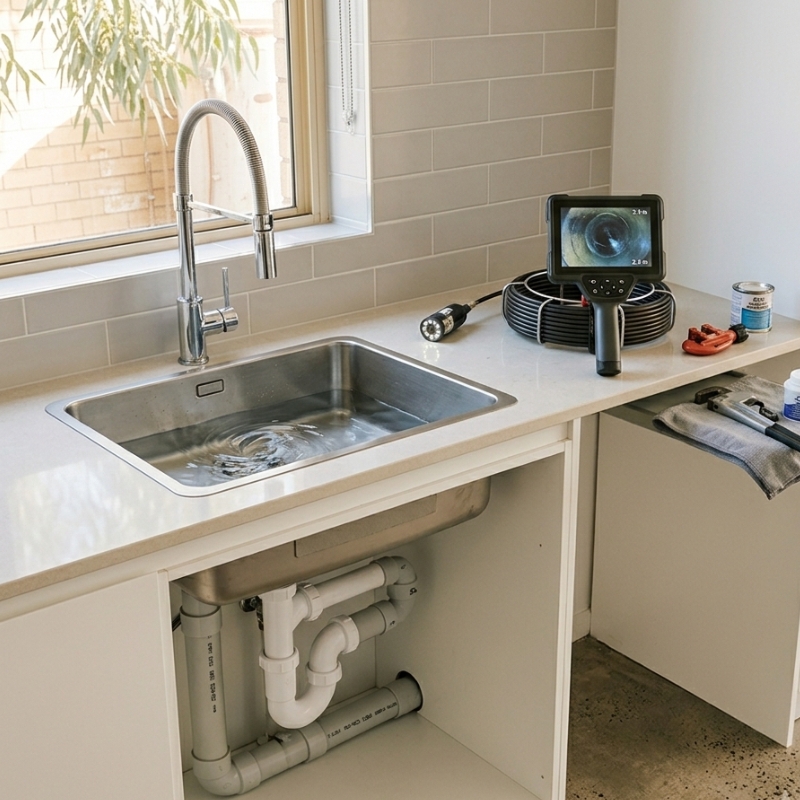
Council sewer diagrams note whether your branch line is clay or plastic, but that data often stops at the property boundary. Renovations in the 1990s commonly left a clay junction just outside the bathroom before switching to PVC. Tree roots head for tiny rubber ring gaps at these change-over points, especially after a dry spell when groundwater drops. A camera inspection shows silky white root hairs sneaking through joints that look perfect from above. Annual jet cutting—ideally before spring growth—keeps roots trimmed back. If camera footage shows joints separating, pipe relining is now cheaper in Sydney than a dig-up under pathways, provided the section is under two metres long.
Myth 5 – “Slow floor drains will clear themselves once the rain stops”
Heavy Sydney downpours push stormwater into sewer vents through illegal cross-connections. The water level can rise inside house traps, making garage or patio grates gurgle. When the rain eases, levels fall and the problem appears solved. Homeowners then forget about it until next storm season—by which time silt and leaf litter have compacted, narrowing the pipe further. The sooner silt is vacuumed out, the lower the chance of raw sewage bubbling up through a downstairs shower recess during a true storm surcharge.
Myth 6 – “Pipe relining is always overkill”
Relining earned a reputation for being the big-ticket upsell. Prices have moderated since 2020 as more Sydney crews invested in inversion machines. For short runs under five metres, sectional relining can now rival traditional excavation once you factor in tiler, concreter and landscaper repairs. The trick is a proper cost comparison that tracks all follow-on trades rather than headline plumbing hours. Relining still isn’t right for every job—collapses at junctions or heavy sags need excavation—but it is no longer a niche last resort.
Sydney Water’s own advice on household wastewater echoes this: persistent root intrusion usually warrants structural repair, not endless clearing.
Spotting bad advice in 2026
Social platforms accelerated myth-spreading. Clips showing lorry-loads of ice cubes “scrubbing” disposals, or cola dissolving scale, rack up millions of views in hours. Check any tip against three quick filters:
- Source – Does the creator hold a NSW plumbing licence or reference Australian Standards?
- Scope – Is the demo pipe clear plastic on a bench, not a 40-year-old line under a slab?
- Safety – Are gloves, goggles and ventilation mentioned?
If any answer is no, treat the hack as entertainment, not guidance.
Practical moves that work
Sydney Blocked Drain Service has logged thousands of call-outs since 1998. Common sense patterns stand out:
- Catch hair and food scraps before they enter the pipe—cheap sink strainers cost less than a coffee.
- Rinse kitchen drains with a minute of hot (not boiling) water after greasy meals.
- Schedule a camera check every three to five years for houses with mature trees or suspected clay pipes.
- Act on the first gurgle. Clearing an 80 mm line takes half the time—and cost—before buildup solidifies.
Proactive care beats emergency pumps at 10 pm when every local crew is already deployed.
When to pick up the phone
Certain red flags mean the blockage is beyond household tools:
- Multiple fixtures backing up at once.
- Overflow relief gully spilling sewage outdoors.
- Plunger rebounds without shifting water level.
- Repeated need for chemical openers in the same drain.
At that point, licensed equipment and experience are the only safe route. Prompt intervention also protects you against water damage exclusions hidden in many home insurance policies.