
Trenchless Pipe Relining vs Traditional Dig-Ups: 2026 Guide for Space-Tight Sydney Backyards
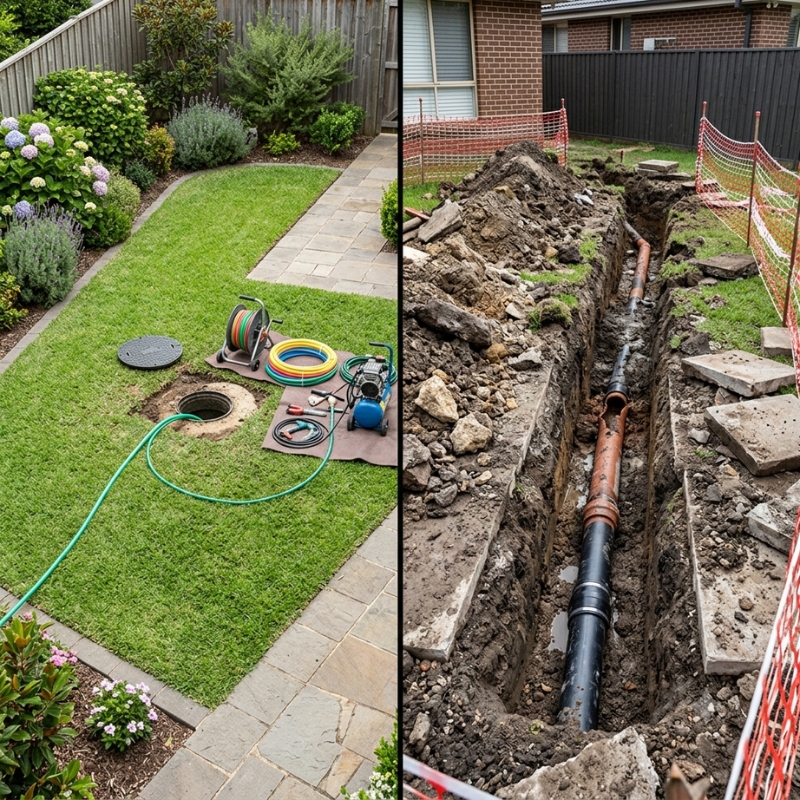
Why Backyard Space Dictates Your Repair Method
Most detached homes around Sydney went up long before anybody worried about fitting a plunge pool, a studio or an outdoor kitchen into the yard. In 2026, every square metre behind the house is precious. Property prices keep climbing, blocks keep shrinking, and councils want established trees left where they are. So when a sewer or storm-water line finally gives up, the repair you choose will either protect that hard-won outdoor living area or turn it into a demolition zone.
The old approach was to excavate a trench from the house to the boundary. Lawn, pavers, garden beds and often a retaining wall were all collateral damage. These days plenty of homeowners go to pipe relining specialists instead. Relining repairs the pipe from the inside, usually through a single entry point, and leaves the surface largely untouched. Both methods still have their place. Understanding the trade-offs before you pick up the phone is what saves you money.
The Core Difference in Plain English
A traditional dig-up replaces the damaged section with new PVC. A mini-excavator, or something bigger, exposes the pipe along its run. The crew cuts out the old line, slots the new pipe in, backfills, then reinstates the yard. Relining works differently. A resin-soaked sleeve is drawn or inverted into the existing pipe and cured hard, forming a new pipe inside the old shell. Access pits are minimal, and usually sit at an existing inspection opening or junction.
The question we get asked most is whether a liner really lasts like fresh PVC. A properly specified structural liner is engineered to carry the load on its own, independently of the host pipe, and it comes with a structural rating you can ask to see. That’s the document to request, rather than taking anyone’s word for it. In practice the deciding factors are rarely about raw lifespan anyway. They come down to access, soil movement, tree root pressure, and what it costs to put your landscaping back.
Head-to-Head Snapshot
| Factor | Trenchless Relining | Traditional Dig-Up |
| Yard disruption | Localised to one or two small pits | Continuous trench the length of the run |
| Typical project time* | 1 to 2 days | 3 to 7 days |
| Noise and dust | Limited to jetter and curing gear | Excavator, jackhammers, trucks |
| Council approvals | Often classed as maintenance | May require an excavation permit in some LGAs |
| Driveway or patio removal | Rare | Common if the pipe passes beneath |
| Finished pipe diameter | 5 to 10 mm smaller | Same as new PVC |
| Up-front cost** | Higher for straight runs under grass | Lower when reinstatement is simple |
| Long-term tree root resistance | Excellent, because there are no joints | Good, if the joins are perfect |
*Based on an average 12 m run.
**Excludes reinstatement costs.
When Relining Shines in Tight Sydney Yards
- Pipes running beneath sandstone retaining walls on the North Shore, or in hillside suburbs like Balmain. Pulling those walls down and rebuilding them dwarfs the slight premium you pay for relining.
- Heritage terraces in Paddington or Newtown, where the rear courtyard tiles sit on a concrete slab. Cutting that slab triggers heritage approvals. Relining sidesteps the whole business.
- Homes that have just invested in a designer lawn, a composite deck or a plunge pool. Pulling them apart feels wasteful because it is, and it can void builder warranties into the bargain.
Relining crews generally need a working zone of about 1.5 by 1.5 metres, near the boundary or at an internal riser. Modern inversion drums and UV cure rigs will fit through a side passage as narrow as 600 mm, which is a common constraint in the post-war fibro cottages around Ryde and Lane Cove.
Where Digging Still Wins
- A belly or a bad fall. A liner follows the shape of the host pipe. It cannot correct a sag or re-grade a run, so if water is pooling because the fall is wrong, lining won’t fix the underlying problem. The grade has to be corrected first, and that means digging.
- A genuine collapse. If a section has caved in, there’s no bore left to line through. Sydney Water applies the same rule to its own mains: the pipe has to be structurally sound for relining to work, and where it’s damaged, they dig and replace that section first.
- A bore that’s already marginal. Relining takes a few millimetres off the internal diameter. Scale and roots get cut and jetted out before any liner goes in, so buildup on its own isn’t the issue. But if the line is already undersized for what it carries, losing more bore is worth thinking hard about.
- Short, easy sections. A 2 m break sitting right beside the inspection shaft is still cheaper to excavate than it is to mobilise a full relining crew.
For a look at the everyday DIY mistakes that push people toward emergency excavations in the first place, this one is a handy companion: The Top 7 DIY Plunger Mistakes That Turn a Minor Blocked Toilet Into a Plumbing Disaster.
Cost Drivers You Can Control
Relining quotes vary widely because the conditions in your yard are unique. These are the levers that move the number most:
- Length and diameter of pipe. Resin volume climbs with every extra metre.
- Number of junction cuts. Each branch reinstatement adds labour and materials.
- Access to water and power. A tight laneway slows the set-up, and hours add up.
- Cure technology. UV LED curing is quicker, and it attracts a premium for the privilege.
- After-hours scheduling. Night work near a busy road needs an extra crew.
With traditional excavation, watch the costs that sit outside the plumbing quote. Disposal fees for contaminated soil, which is a live issue on old industrial land around Alexandria, plus the reinstatement trades. Concreters, tilers, landscapers. Between them, they can double the base bill. Ask for those allowances in writing before you commit.
Environmental Considerations in 2026
Low-impact repair is increasingly the preference across Greater Sydney. Trucks carting spoil through suburban streets add congestion, and a trench near an established tree risks damaging a critical root zone that may well be protected. Trenchless methods generate very little spoil and, thanks to a flexible liner, often work around roots rather than through them.
Sydney Water takes the same approach to its own network. Its Sewer Rehabilitation Program uses trenchless, no-dig technology to reline ageing wastewater and stormwater pipes, inserting the liner through maintenance holes so nothing needs excavating, and extending the life of those pipes by up to 50 years. Note the caveat they attach to it, though, because it applies to your place as much as to theirs. The pipe has to be structurally sound for a liner to work. Where it isn’t, they dig and replace the damaged section first. If a plumber tells you the same thing about your drain, that’s not an upsell. It’s the same standard the water utility holds itself to.
Making the Call for Your Backyard
If the pipe route runs under prized landscaping, recent hardscaping or heritage fabric, relining gives you the quickest and cleanest fix, with a service life that stands up. Where a collapse is localised and easy to reach, excavation keeps the cost down. Either way, the smartest first move is a CCTV inspection with footage you get to keep. A clear picture reveals the bellies, the dislodged joints and the collapsed sections, and it tells you which method genuinely suits your yard. Not simply which one the plumber prefers.
Whichever path you take, insist on three things. A written warranty. Proof of the liner’s structural rating, if you go trenchless. And confirmation that every junction was reinstated. Tick those boxes and you can fix your failing drains and still enjoy every square metre of your Sydney backyard this summer.