
Pipe Relining Sydney
We repair cracked and root-damaged Sydney drains from the inside, forming a new jointless pipe within the old one through an existing opening. The cracks and open joints that roots were coming through are sealed, and the driveway, slab or garden over the top does not have to be opened up. We camera the line first and tell you plainly whether it can be relined. Book an assessment, or call to talk it through.
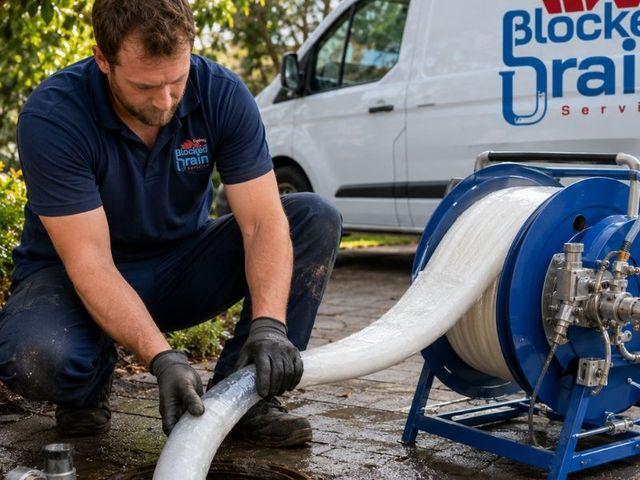 No excavation, installed through existing access
What pipe relining actually involves
Four stages. The first one is the reason we will sometimes tell you the line cannot be relined at all.
The line is surveyed first
Nothing can be relined until the inside of the pipe has been seen. The camera records the fault, its position and its length, and confirms the line still holds enough shape for a liner to pass through and sit against the wall.
The pipe is cleaned back
A liner bonds to the pipe wall, so the wall has to be clean. Roots are cut out and the surface is scoured back with jetting until there is bare pipe to bond against.
A resin-saturated liner is positioned
A flexible liner is saturated with resin and drawn into place through the existing access, then inflated so it presses hard against the inside of the host pipe along the full length of the repair.
It cures into a new pipe
The resin hardens in place and the result is a continuous jointless pipe inside the old one. The cracks and open joints that were letting roots in are sealed, because there are no longer any joints there to open.
Relining or replacement
These are not competing products to choose between on price. The condition of the pipe decides which is possible, and the camera decides the condition.
| Compared on | Pipe relining | Pipe replacement |
|---|---|---|
| Digging | None. The work is done through existing access points | Excavation along the line of the pipe |
| Your garden and driveway | Stay as they are | Opened up and reinstated afterwards |
| Working inside the pipe | A new jointless pipe formed inside the old one | The old pipe is removed and new pipe laid |
| Joints | None in the relined section, so nothing for roots to enter | New joints at each connection |
| When it is the right call | The pipe is damaged but still holds its shape | The pipe has collapsed or lost its fall |
| What decides it | Camera footage, not a preference | Camera footage, not a preference |
When a liner is possible
The honest version. A liner needs a host pipe with enough shape left to take it.
- Cracked or fractured pipe that still holds its shape
- Open or displaced joints that roots are entering through
- Lines damaged by roots once the roots have been cut out
- Deteriorated earthenware that has not collapsed
- Lines under a driveway, a slab, paving or established garden
- A single damaged section within an otherwise sound run
- A pipe that has collapsed or caved in
- A section that has dropped badly and lost its fall
- A line so out of shape a liner cannot be drawn through
- Pipe that has corroded away rather than cracked
- Severe misalignment where two sections no longer meet
What trenchless actually saves you
Established trees stay
Excavating a drain line usually means cutting through root systems that took decades to establish. A liner goes in through an existing opening, so mature trees are not disturbed.
Driveways, paving and slabs stay
A line running under a concrete driveway or beneath a slab is the clearest case for relining, because the alternative involves breaking out the surface and reinstating it.
The property stays usable
There is no open trench across the yard and no spoil heap. Access is limited to the area around the opening the liner goes in through.
The repair is sealed, not patched
Because the liner is continuous through the repaired length, the joints and cracks that let roots in are no longer there. That is what stops the blockage returning.
How the price works
There is no charge for coming out and looking at the problem.
You get the price before any work begins, and nothing goes ahead until you agree to it.
We take calls through the night, on weekends and on public holidays.
Pipe relining questions
How long does a relined pipe last?
Cured-in-place liners are a long-term structural repair rather than a patch, and the relined section no longer has the joints that failed in the first place.
We do not publish a lifespan figure here, because the honest answer depends on the product used, the condition of the host pipe and the ground around it. You will be told what is being installed and what the manufacturer states for it before the work goes ahead.
Can any damaged pipe be relined?
No, and anyone who says otherwise has not looked. A liner needs a host pipe that still holds its shape well enough for the liner to be drawn through and pressed against the wall.
Where a line has collapsed, dropped badly or lost its alignment, replacement of that section is the right answer. The camera footage is what decides it, and you see it.
Do you have to dig anything up at all?
Relining itself is trenchless and is carried out through existing access points such as an inspection opening or a gully. In most jobs nothing is excavated.
Occasionally a property has no usable access to the line at all, and a small opening has to be made to get to it. If that applies you would know before the work started, not afterwards.
How is relining different from just clearing the drain?
Clearing removes what is blocking the line. Relining repairs the line itself.
If roots keep coming back, clearing is treating the symptom: the roots return to the same crack or joint because the moisture is still escaping through it. Relining closes that opening, which is why it is the thing that actually stops the cycle.
Is relining cheaper than replacing the pipe?
Often, but not always, and the comparison is rarely just the pipe. Replacement adds excavation, spoil removal and reinstating whatever was over the top, which is where the cost usually sits on a Sydney property.
Where a line is accessible, shallow and in open ground, replacement can be the simpler job. Where it runs under a driveway, a slab or established garden, relining is usually both cheaper and far less disruptive.
Can you reline just one section?
Yes. A patch liner repairs a defined length rather than the whole run, which is the usual approach when the camera shows one bad joint in an otherwise sound line.
Where a line has multiple faults along its length, lining the full run is often better value than repeating the setup several times.
Related drain services
Book a pipe relining assessment
It starts with a camera survey, because nothing else can tell you whether a liner will work. You see the footage, and if the line needs replacing instead you will be told that rather than sold a liner that cannot hold.
NSW Licence 306733C. Fully insured. $0 call-out fee. Blocked drains cleared from $69.