
Drain Pipe Replacement Sydney
We replace Sydney drain and sewer lines that have collapsed, dropped out of fall or pulled apart at a joint, where no liner can restore the shape. Because it is the larger job, we only recommend it once the camera has shown why relining will not hold, and the price is agreed before we start. Book an assessment and find out which one your line needs.
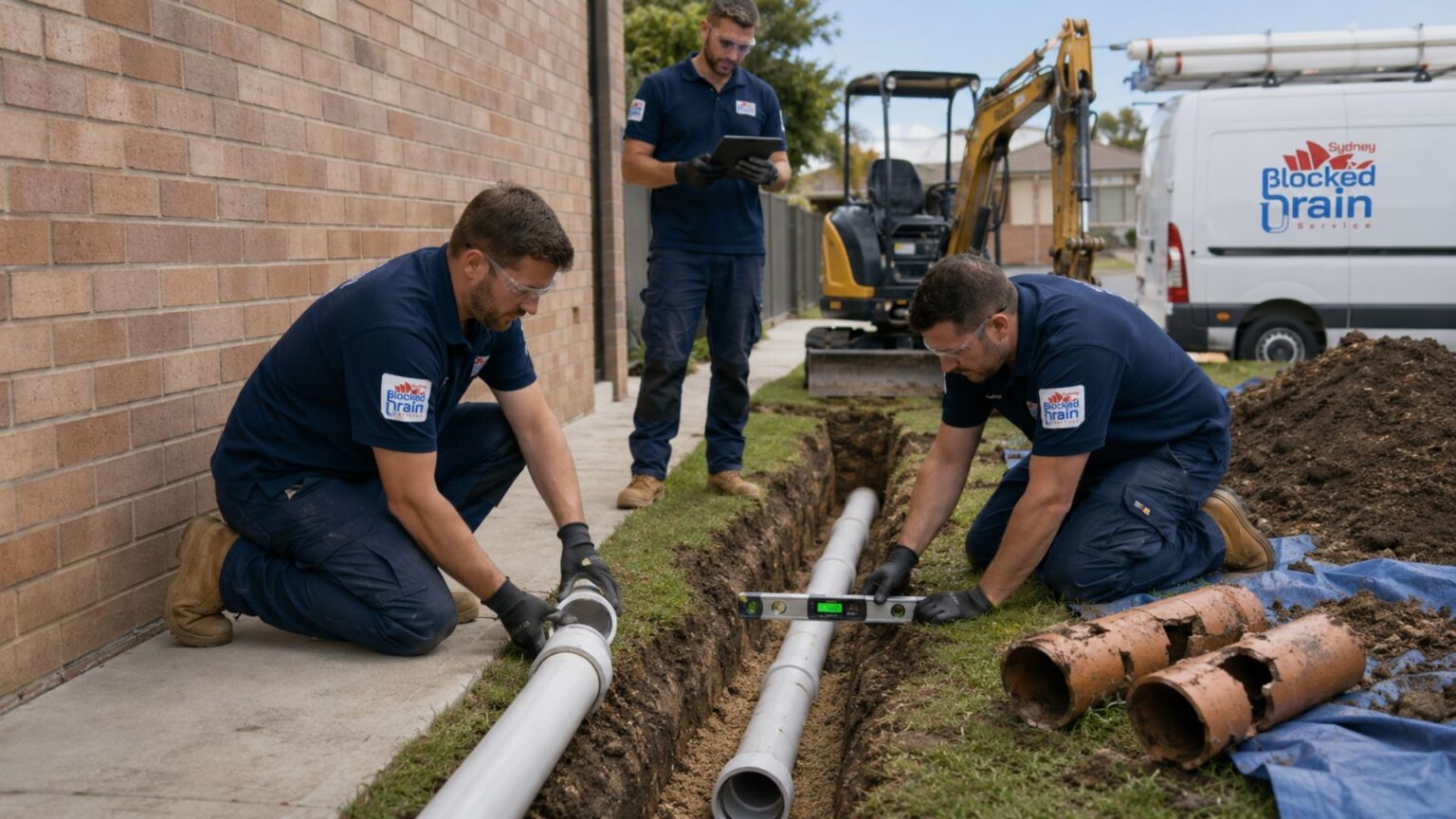
Relining is always considered first
Replacing a drain line means excavating it, and on a Sydney property the cost usually sits in what is over the top rather than in the pipe. Driveways, paving, slabs and established gardens all have to be opened and reinstated.
So pipe relining is assessed first in every case, and replacement is recommended only where the footage shows a liner cannot work. If anyone quotes you a replacement without showing you why a liner will not hold, that is worth questioning.
When a line has to be replaced
Five situations. The first three are the common ones, and all three are visible on camera rather than being matters of opinion.
The pipe has collapsed
A caved-in section cannot be lined, because there is no longer a host pipe for a liner to press against. The camera usually cannot pass it either, which is itself the answer.
A section has dropped and lost its fall
Drains rely on gravity. Where the ground has settled and a length of pipe now sits lower than the run either side, solids collect at the low point and the line blocks there repeatedly. A liner follows the existing shape, so it cannot restore fall that is gone.
The line is badly out of alignment
Where two sections no longer meet squarely, a liner cannot be drawn cleanly through the joint. Relining needs a continuous path and a displaced joint does not provide one.
The pipe has corroded away
Some older materials deteriorate rather than crack. Where the wall has thinned to the point that it cannot support a liner being pressed against it, the section has to be renewed.
The line is in the wrong place
Occasionally a drain runs where something is now built, or where a planned extension will sit. That is a relocation rather than a repair, and it is the one case where excavation is chosen rather than forced.
What a pipe replacement involves
Four stages. The second one is what keeps the excavation small.
Confirm it on camera first
Replacement is the larger job, so it is never recommended on a guess. The footage has to show why a liner will not work, and you see that footage.
Locate the line precisely
The run is traced and the depth recorded from the surface, so the excavation opens where the pipe actually is rather than where it was assumed to be. This is what keeps the opening small.
Open only the failed length
Where one section has failed in an otherwise sound run, only that section is dug out. There is rarely any reason to open a whole line.
Lay, test and reinstate
New pipe is laid to the correct fall, the line is tested under flow, and the surface is backfilled and reinstated. The camera goes through afterwards so the finished line is recorded.
How the price works
There is no charge for coming out and looking at the problem.
You get the price before any work begins, and nothing goes ahead until you agree to it.
We take calls through the night, on weekends and on public holidays.
Pipe replacement questions
How do I know the pipe actually needs replacing?
Because the camera shows it. A line that is cracked but still round can almost always be relined, and that is the cheaper and less disruptive answer.
Replacement becomes the right call when the pipe has collapsed, dropped out of fall, or is so misaligned a liner cannot pass. If you have been told a line needs replacing and have not seen footage showing one of those, ask for it.
How much of my garden will be dug up?
Only the length that has failed, in most cases. The line is traced and the depth confirmed first precisely so the opening can be kept to the failed section rather than opening a trench along the whole run.
Where a line runs under a driveway or a slab, that is usually the strongest argument for relining instead, and it is considered first for exactly that reason.
Do you reinstate the surface afterwards?
The excavation is backfilled and the surface made good. What reinstating involves depends on what was over the top, and that is set out in the quote before the work starts rather than discovered afterwards.
Is replacement better than relining?
Neither is better. They answer different problems. A liner repairs a pipe that still holds its shape. Replacement renews a pipe that does not.
Where both are genuinely possible, relining is usually less disruptive and less expensive once reinstating the surface is counted. Where the line has collapsed or lost its fall, relining is not an option at any price.
Can you replace just one section?
Yes, and that is the usual job. Replacing a whole line is only sensible where the camera shows the run is failing along its length rather than at one point.
Related drain services
Book a pipe replacement assessment
It starts with a camera survey, because that is the only thing that can separate a pipe which can be lined from one which cannot. If a liner will work, you will be told that, and it is the cheaper job.
NSW Licence 306733C. Fully insured. $0 call-out fee. Blocked drains cleared from $69.