Electric Eel vs Hydro Jet: Which Drain Clearing Method Suits Your Blockage?
An electric eel cuts through a single solid blockage, such as tree roots or a packed wipe plug, with a rotating cable. A hydro jet scours the whole pipe wall with high pressure water, removing grease, silt and scale. Roots usually need the eel, grease usually needs the jet, and many jobs use both.
How an electric eel works
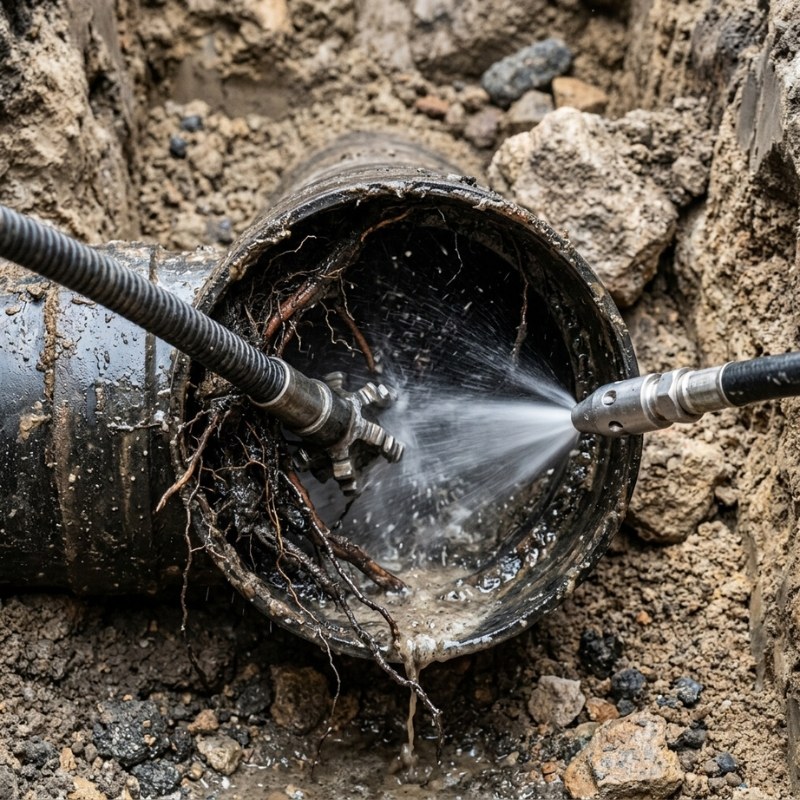
An electric eel is a motor that spins a long steel cable with a cutting head on the end. The drainer feeds it into the drain from an access point until it reaches the blockage, and the spinning head cuts through. Different heads suit different jobs: bladed root cutters, augers for paper and wipes, chain knockers for heavier build-up.
Its strength is cutting power at a distance. A root mat 15 metres along a clay sewer is dense and fibrous. Water alone will not move it, but a root cutter will. Its limit is that it opens a channel rather than cleaning the pipe wall, so grease and scale are left behind.
How a hydro jet works
A hydro jet, or high pressure water jetter, pumps water at high pressure through a reinforced hose to a nozzle with rear-facing jets. Those jets pull the hose along the pipe and blast the wall as they go, then the debris is flushed downstream as the hose comes back.
Because it cleans the full circumference, jetting is the method for coatings: fat on a kitchen line, silt in stormwater, soap scale in a bathroom waste. It also flushes away the cuttings an eel leaves behind, which is why the two are often used together.
Side by side comparison
Here is how the two methods compare on the things that matter when you are choosing.
| Electric eel | Hydro jet | |
|---|---|---|
| How it works | Spinning cable with a cutting head | High pressure water through a nozzle |
| Best for | Roots, wipes, solid plugs | Grease, silt, sand, scale |
| Cleans the full pipe wall | No, opens a channel | Yes |
| Heavy root mass | Best choice | Follow-up flush |
| Fragile or cracked pipe | Camera first, gentle approach | Camera first, pressure adjusted |
| Typical result on grease | Short-lived | Long-lasting |
Guide only. A camera inspection decides which suits a particular line.
What about other drain cleaning methods?
A plunger works on soft blockages in the trap of a toilet or sink. A hand auger, or snake, reaches a little further and suits basin and shower wastes. Chemical cleaners can shift a light organic film but do nothing to roots, wipes or a damaged pipe, and they make the job hazardous for whoever clears it next. Enzyme products are gentle maintenance at best.
For anything past the first bend, or anything that keeps coming back, the choice is between cutting and jetting, and a CCTV drain inspection is how you choose correctly.
Which one does your blockage need?
Use the symptom as a starting point. A sewer that blocks every few months in an older home with trees nearby is almost always roots, and an eel is the first tool. A kitchen sink that slows over weeks is grease, and jetting is the answer. A stormwater line that floods after storms is usually silt or leaves, and jetting suits it too.
If the line blocks again soon after either method, the pipe itself is likely damaged, and neither cutting nor jetting will fix that. That is when relining or replacement comes in.
What happens after the drain is cleared
Clearing restores flow but does not remove the reason the drain blocked. Roots grow back through the same joint. Grease builds up again if fat keeps going down the sink. A camera after clearing tells you which situation you are in, so you can choose between maintenance, a habit change, or a repair.
Frequently asked questions
Is an electric eel or hydro jet better for tree roots?
An electric eel is usually better for tree roots because its cutting head shears through dense root mats that water cannot move. A hydro jet with a root nozzle can handle fine roots and is useful for flushing cuttings away afterwards. Neither stops roots growing back through a damaged joint.
Is hydro jetting better for grease?
Yes. Hydro jetting scours grease off the whole inside of the pipe, restoring it close to full diameter. An electric eel only punches a channel through the grease, so the line tends to block again quickly. Kitchen lines and commercial kitchens are usually jetted.
Can a hydro jet damage old pipes?
On sound pipes, no, provided the pressure and nozzle suit the pipe. On pipes that are already cracked or collapsing, any method can make things worse, which is why older lines with a history of problems are checked on camera before jetting.
Is an electric eel cheaper than hydro jetting?
For a single root or plug blockage, an eel clear is often quicker and so can cost less. Jetting a long or heavily coated line takes more time. The cheapest option overall is the one that suits the blockage, because using the wrong method means paying twice.
Do plumbers use both methods on the same job?
Often, yes. A common approach on root-blocked sewers is to cut the roots with an electric eel, flush the cuttings and remaining debris with a jetter, then run a camera to see the joints the roots came through.
Can I hire an electric eel instead of calling a plumber?
Drain machines can be hired, but they are heavy, the cable can whip or kink, and cutting into a cracked pipe can break it. You also will not see what caused the blockage. For anything beyond a simple waste, a licensed drainer is the safer choice.
What to do next
If your drain has roots, book electric eel drain cleaning. If it is grease or silt, book hydro jetting. If you are not sure, describe the symptom when you call (02) 8960 0868 and we will tell you which method suits it before we come out.
Talk to a licensed Sydney drainer. $0 call-out fee, and you get the price before anything starts.
Call (02) 8960 0868More drain advice
Still blocked? Book a drainer
We clear blocked drains across Sydney, every day and through the night. Tell us what the drain is doing and we will tell you what it takes to fix it.
NSW Licence 306733C. Fully insured. $0 call-out fee. Blocked drains cleared from $69.