Pipe Relining vs Pipe Replacement: How Sydney Homeowners Choose (and What Affects the Cost)
If a plumber has told you a pipe is damaged, you’re likely facing a choice between two repairs: pipe relining or pipe replacement. It’s an important decision, because it affects the disruption to your property, the longevity of the fix and the cost, yet it’s rarely explained clearly. This guide from Sydney Blocked Drain Service, a team of licensed Sydney plumbers, walks you through how pipe relining and replacement differ, when each is the right call, and what drives the cost, so you can weigh up your options with confidence rather than simply taking the first suggestion at face value.
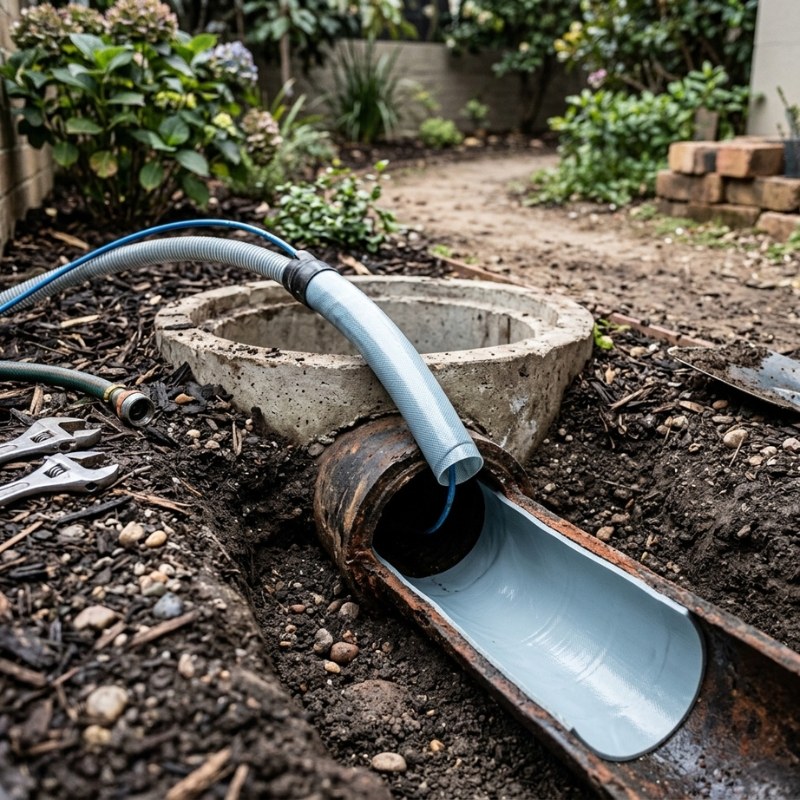
Pipe relining repairs a damaged pipe from the inside by curing a new liner in place (no digging), and suits pipes that are cracked, leaking or root-affected but still structurally continuous. Pipe replacement (excavation) is needed when a pipe is collapsed, badly misaligned or beyond relining. A CCTV inspection is what decides between them; relining is usually faster and less disruptive when the pipe qualifies.
What is pipe relining (trenchless repair)?
Pipe relining is a trenchless, or “no dig”, method of repairing a damaged pipe from the inside, without excavating it out of the ground. In simple terms, a new liner coated with a special resin is inserted into the existing damaged pipe, positioned over the damaged section, and then cured so it hardens in place. The result is effectively a strong new pipe formed inside the old one, sealing cracks, stopping leaks and blocking the gaps where tree roots were getting in. The big advantage is in the words “no dig”: because the repair happens from inside the pipe through existing access points, there’s usually no need to dig up your garden, driveway, paths or floors to reach it. That means far less mess, disruption and reinstatement work than traditional excavation, which is a major reason relining is so popular with homeowners. It suits pipes that are cracked, leaking or affected by roots but still structurally continuous; in other words, damaged but not collapsed. Our pipe relining restores these pipes with minimal disturbance to your property, which is often exactly what people are hoping for when they hear “pipe repair” and picture a dug-up backyard.
When is pipe replacement the right call?
Relining is excellent when a pipe qualifies, but it isn’t always possible, and sometimes replacing the pipe is genuinely the right answer. Replacement involves excavating down to the damaged pipe and installing a new one, and it’s the appropriate choice when a pipe is in a condition that relining can’t address. The clearest case is a collapsed pipe: if a section has caved in, there’s no longer a continuous pipe to line, so it has to be dug up and replaced. Severe misalignment, where sections have shifted badly out of position, can also put a pipe beyond relining, as can damage so extensive that lining isn’t viable. In these situations, excavation is unavoidable, and while it’s more disruptive, involving digging and then reinstating the ground afterwards, it’s sometimes the only way to properly fix the problem and restore reliable drainage for the long term. The key is that replacement is driven by the pipe’s condition, not a default preference, and a good plumber will only recommend pipe replacement when the pipe genuinely can’t be relined, because for most homeowners the less disruptive option is preferable when it’s available.
Relining vs replacement: a decision guide
When you weigh the two options side by side, the trade-offs become clear. This comparison shows how they differ on the things homeowners care about most:
As a rule, relining is the less disruptive, often faster option when the pipe qualifies for it, while replacement is reserved for pipes too damaged to line. Neither is universally “better”; the right one depends entirely on the condition of your specific pipe, which is exactly what needs to be established before you decide.
What affects pipe relining cost in Sydney?
Homeowners understandably want to know the cost, and while we can’t give a fixed figure because it genuinely varies, we can explain what drives it, so you understand your quote. The length of pipe that needs repairing is a major factor, since a longer damaged section takes more material and time than a short one. The number of junctions or bends involved matters too, as more complex pipe layouts are more involved to line. Access plays a part, because how easily the pipe can be reached affects the work required. The condition of the pipe itself is relevant, and if tree roots or a blockage have to be cleared out first before relining can happen, that’s part of the job as well. Because all of these differ from property to property, the only accurate figure is a quote based on your actual situation, which is why we always frame it as “varies, request a quote” rather than misleading you with a one-size-fits-all number. What matters is that a proper assessment lets us quote accurately, so you know what you’re paying for and why, with no surprises once work begins.
How a CCTV inspection determines the fix
Everything hinges on knowing the pipe’s true condition, and that’s what a CCTV drain inspection provides. By sending a camera through the pipe, the plumber can see whether it’s cracked but continuous, and therefore a candidate for relining, or collapsed and in need of replacement, along with the exact location and extent of the damage. This is what turns the reline-versus-replace decision from a guess into an informed choice, and it’s why a camera inspection almost always comes first.
How to prevent future pipe damage
Once your pipe is repaired, a few sensible habits help protect it and reduce the chance of facing this decision again. Tree roots are one of the biggest causes of pipe damage in Sydney, particularly around older pipes and joints, so managing trees near your drainage lines and dealing with root intrusion early, through tree root removal before roots cause structural damage, makes a real difference. What goes down your drains matters too: keeping fats, oils and food scraps out of the kitchen sink, and not flushing wipes or sanitary items, prevents the build-up that stresses and blocks pipes. And catching problems early is perhaps the most valuable habit of all, because a periodic inspection can spot root intrusion, small cracks or the beginnings of a sag long before they turn into a collapse that forces a full replacement. In other words, a little prevention, root management, mindful drain habits and the occasional check goes a long way towards keeping your pipes sound and avoiding the more expensive, disruptive repairs down the track.
Frequently asked questions
How long does pipe relining last?
Pipe relining is a long-term repair, designed to last for decades when done correctly on a suitable pipe. The cured liner forms a strong new surface inside the old pipe that seals cracks and keeps roots out. Because conditions vary, your plumber can explain what to expect for your specific pipe and situation.
Is relining cheaper than replacing a pipe?
It often works out more cost-effective overall, largely because it avoids excavation and the cost of reinstating dug-up gardens, driveways or floors. However, the total depends on the length, complexity and condition of your pipe, so there’s no fixed answer. The honest approach is a proper assessment and a quote for your specific job.
Can any pipe be relined?
Not every pipe. Relining suits pipes that are cracked, leaking or root-affected but still structurally continuous. A pipe that has collapsed or is badly misaligned generally can’t be relined and needs replacing. The only way to know which applies to your pipe is a CCTV inspection, which reveals its true condition before any decision is made.
Do I need council approval to reline a pipe?
Requirements can vary depending on the work and the property, so it’s best to confirm rather than assume. As licensed Sydney plumbers, we can advise what’s appropriate for your specific job and make sure the repair is done correctly. If any approvals apply to your situation, we’ll help you understand what’s needed before work begins.
Final thoughts
Choosing between pipe relining and replacement comes down to the condition of your pipe, not guesswork or a default. Relining is the less disruptive, often faster option, no digging, when the pipe is cracked or root-affected but still continuous, while replacement is the right call for pipes that have collapsed or are beyond lining. Cost varies with length, complexity and access, so an accurate quote follows a proper look at the pipe. Want to know whether your pipe can be relined? Book a Sydney pipe relining assessment, and we’ll confirm the right repair before you commit.
Book a plumber
Want to know whether your pipe can be relined? Book a Sydney pipe relining assessment on (02) 8960 0868, and we’ll confirm the right repair for your pipe.
Talk to a licensed Sydney drainer. $0 call-out fee, and you get the price before anything starts.
Call (02) 8960 0868More drain advice
Still blocked? Book a drainer
We clear blocked drains across Sydney, every day and through the night. Tell us what the drain is doing and we will tell you what it takes to fix it.
NSW Licence 306733C. Fully insured. $0 call-out fee. Blocked drains cleared from $69.